Sports apps have transformed how fans engage with cricket and other sports. From fantasy leagues and live score platforms to streaming-integrated experiences, users now expect real-time updates, seamless navigation, and highly engaging interactions on their mobile devices.
As competition in the sports technology space grows, great sports app UX design has become a key differentiator. Apps that deliver fast, intuitive, and user-centric experiences retain users longer, while poor design can quickly drive them away.
In this article, we explore key UX lessons from cricket, fantasy sports, and live score platforms, highlighting the design principles that help create engaging sports products and lasting fan loyalty.
Why Sports App UX Design Is Critical for User Engagement and Retention
Sports apps exist in a category defined by intensity, immediacy, and emotion. No other digital product category is used with the same combination of urgency and personal investment. When a user opens a live score app mid-match, they are not browsing — they are seeking a specific piece of information, and they need it in under two seconds. When a fantasy player is making last-minute lineup changes before a match deadline, every additional tap in the journey is a potential drop-off point.
This real-time emotional context makes Sports App UX Design uniquely demanding. The competitive landscape is also relentless: Dream11, MPL, CricBuzz, ESPNcricinfo, and a wave of newer regional entrants all compete for the same screen time. Users will not give a struggling interface a second chance when a better-designed alternative is one install away.
The business impact of great UX in sports applications is measurable and significant. Platforms with frictionless onboarding see higher first-session retention. Apps with well-architected live data experiences report longer average session durations — sometimes two to three times the industry baseline. And fantasy platforms that reduce team creation friction see directly improved contest entry rates and revenue.
This is not simply about visual polish. Great sports app UX design is about understanding exactly what users need at the moment of highest engagement, designing information hierarchies that deliver that content instantly, and building interaction models that respect the emotional state of a sports fan in the middle of a match. It demands a user experience agency that understands both the product design discipline and the domain-specific psychology of sports engagement.
Understanding Sports App User Behaviour
Cricket Fans
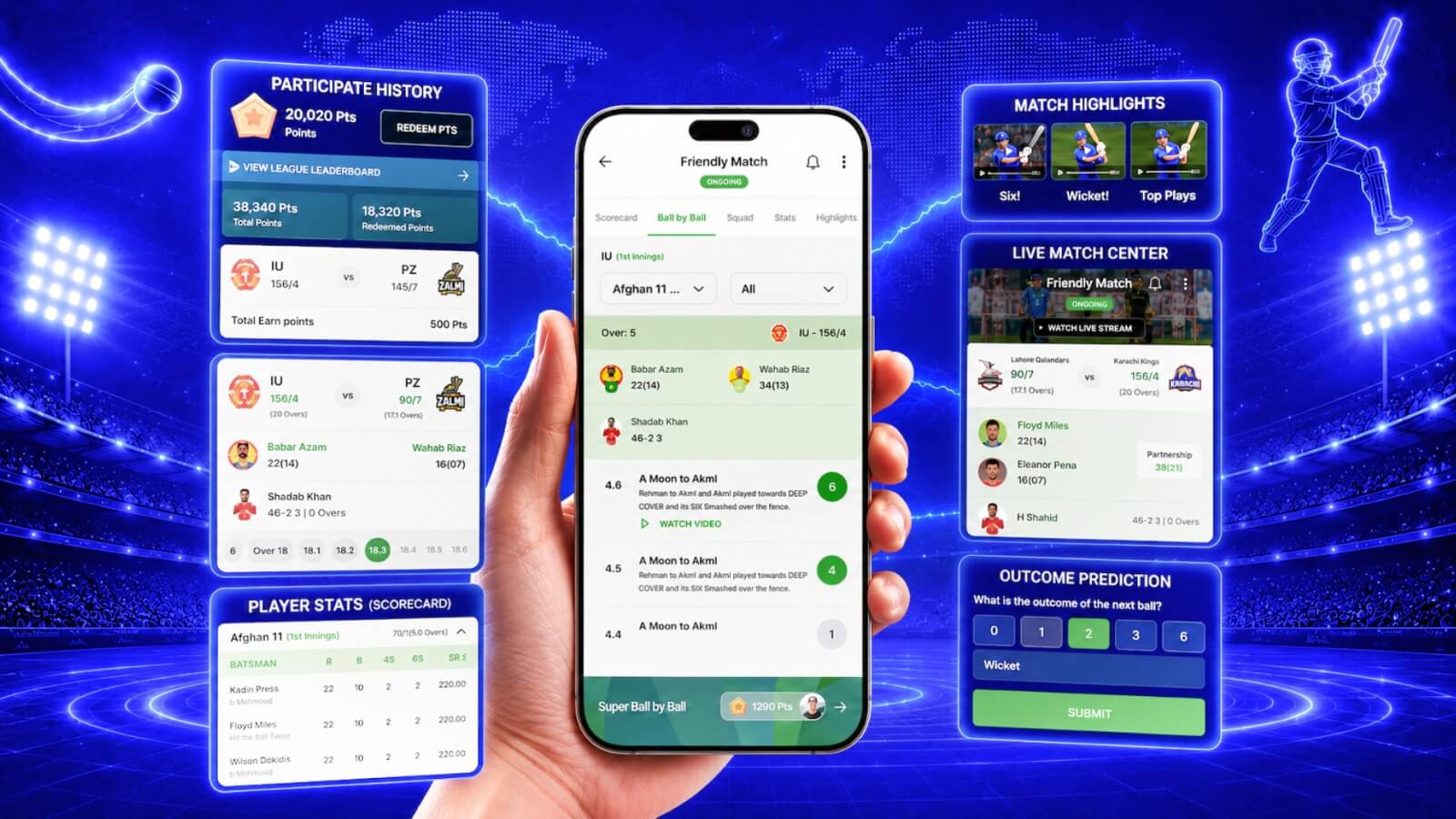
A cricket fan using a live score or match companion app is primarily seeking real-time information — current score, fall of wickets, run rate, ball-by-ball commentary, and player performance data. Their session behavior is characterised by frequent short-duration check-ins rather than extended linear browsing. During an active match, a fan may open the app fifteen to twenty times across an afternoon. Each interaction must be fast, accurate, and contextually relevant. Pain points typically arise from delayed score updates, poorly organised scorecard layouts, and notification fatigue from irrelevant alerts.
Fantasy Sports Players
Fantasy sports users display a more complex behavioral profile. Their engagement cycles are driven by pre-match team selection, in-match score tracking, and post-match performance analysis. Decision-making is active and sometimes stressful — particularly for high-stakes contests with entry fees. Users need to access player statistics, compare options, make budget decisions, and select captain and vice-captain choices within tight timeframes. Friction at any of these steps directly reduces contest participation rates. The fantasy sports app design challenge is to make a complex decision-making process feel effortless and engaging.
Live Score Users
Live score users are the most speed-sensitive segment. They are often in situations where they cannot follow a match closely — at work, commuting, or in a social setting — and they use the app to stay connected with the minimum viable effort. For this audience, information density, load speed, and notification precision are the dominant UX concerns. A live score app that takes four seconds to load or displays stale data will be deleted and replaced. The live score app design priority is radical simplicity in service of speed.
7 Key Lessons from Successful Sports App UX Design
1. Prioritise Real-Time Information Delivery
The single most important principle in Sports App UX Design is that live data must feel live. Users have a visceral sense of when information is stale — and a score update that arrives fifteen seconds after a wicket falls destroys the emotional experience the app exists to support. Beyond technical latency, the visual design of live data matters enormously.
Effective cricket app UI design uses progressive disclosure to show the most critical information — current score, match status, and the most recent event — instantly on the primary view, with richer data available a single tap deeper. Data hierarchy should reflect user priority, not database structure. A well-designed interaction design system for live data delivers the right information at the right moment without requiring the user to navigate.
2. Design for High-Pressure User Moments
Sports apps are used during moments of peak emotional intensity. The last over of a T20 match, a fantasy lineup deadline with three minutes remaining, a match-deciding Super Over — these are not neutral user states. They demand a different approach to interface design than a task management app or an e-commerce product.
Emotional design in sports contexts means anticipating the user's mental state and removing all possible friction from the highest-frequency actions. Notifications must be timely and precise — an alert about a wicket that arrives after the next ball has been bowled is actively damaging to trust. A UI UX Design Agency with experience in sports products understands that the interface itself can amplify excitement or deflate it depending on how well it responds to real-time events.
3. Simplify Complex Data Visualisation
Cricket is a statistics-rich sport, and fantasy sports by nature involves processing significant volumes of player performance data. The temptation to display everything is understandable — but the UX result is almost always counterproductive.
Effective Sports App UX Design applies strong information architecture to tame data complexity. Match insights should be progressively layered: essential metrics first, analytical depth available on demand. Player comparison views should use visual encoding — colour, size, position — to make relative performance immediately legible without requiring users to decode numerical tables. Historical trend data should be presented in scannable charts, not dense spreadsheet-style grids. This is where a skilled UI UX Design Firm adds significant value — translating data architecture into an experience that feels effortless.
4. Create Frictionless Fantasy Team Management
Fantasy team creation is the revenue-driving interaction in any fantasy sports platform. The UX of this flow must balance comprehensive functionality (player stats, budget management, role allocation, captain selection) with an experience that feels fast and intuitive rather than laborious.
Best practices in Fantasy Sports App Design include: surfacing the most relevant player recommendations based on match conditions and recent form; making budget impact visible in real time as players are added or removed; using progressive filtering so users can narrow from a squad of two hundred players to a final eleven without feeling overwhelmed. Captain and vice-captain selection should be contextually guided — showing differential ownership data for users who want to gain an edge in competitive contests. Reducing team creation from fifteen steps to eight can increase contest entry rates by twenty to thirty percent.
5. Optimise Mobile-First Experiences
The overwhelming majority of sports app engagement happens on mobile — often in one-handed, distracted contexts. Real estate mobile app design shares similar mobile-first imperatives, but sports apps carry an additional constraint: they are frequently used while watching television or in a crowd, meaning the user's visual attention is divided.
Thumb-friendly navigation places the most frequent actions within natural reach of the right thumb. Core interactions — checking the score, making a substitution, viewing a player's stats — should require no more than two taps from any screen. Typography must be legible in variable lighting conditions, including bright outdoor environments. A product design approach that begins with mobile constraints produces a cleaner, more focused experience that performs better across all devices.
6. Use Smart Notifications Without Creating Fatigue
Notifications are both the most powerful engagement tool in a sports app's arsenal and the most frequently abused. Users who receive too many irrelevant alerts will disable notifications entirely — eliminating one of the primary channels for re-engagement at key moments.
A smart notification strategy in sports app UX design is personalised, contextual, and user-controlled. Users should be able to define exactly which events trigger alerts — wickets, boundaries, fifty-run milestones, fantasy score updates — and the preference interface must be simple enough that they will actually use it. During a match, the right alert at the right moment drives a user back into the app. The wrong alert at the wrong moment drives them to the settings screen to turn notifications off permanently.
7. Build Community and Fan Engagement Features
Beyond live data and fantasy management, the sports apps with the strongest long-term retention are those that create a sense of community. Polls, fan predictions, discussion threads around match events, and social sharing of fantasy results all extend engagement beyond the match itself — into the pre-match build-up and post-match analysis window.
These community features also serve a product strategy purpose: they generate user-generated content that increases organic reach and creates network effects. A user who shares their fantasy team result on social media is acquiring new users at zero marginal cost. Building community into the product design from the beginning — rather than adding it as a late-stage feature — produces a more cohesive experience and stronger retention metrics. This is a principle that leading sports and fitness design specialists apply consistently across platform types.
Common UX Mistakes in Cricket, Fantasy, and Live Score Apps
Information Overload
Problem: Displaying all available data on the primary screen — scorecard, player stats, commentary, advertisements, and social feeds simultaneously. Impact: Users experience cognitive overload, scan nothing effectively, and leave the app confused. Solution: Apply ruthless information hierarchy. Lead with the single most important data point for the current match state, with everything else accessible within one or two deliberate taps.
Delayed Live Updates
Problem: Score and event data that lags five to thirty seconds behind broadcast. Impact: Users lose confidence in the platform's reliability and switch to a competitor mid-session. Solution: Treat data latency as a UX requirement, not just a technical specification. Define acceptable refresh thresholds in product requirements and test them under peak load conditions. A UX Design Audit can surface latency-related trust issues that internal teams often overlook.
Complicated Fantasy Team Creation
Problem: Team creation flows with excessive steps, unclear budget indicators, and no guidance for player selection. Impact: Lower contest entry rates, higher abandonment during the team creation process. Solution: Redesign the creation flow with usability testing to identify precisely where users drop off. Reduce required decisions, surface intelligent recommendations, and make budget management visual and real-time.
Poor Notification Strategy
Problem: Undifferentiated push notifications that alert users to every event regardless of relevance or preference. Impact: Notification permission disabled by users, eliminating re-engagement capability. Solution: Implement granular notification preferences from the first session. Default to minimal notifications and encourage users to opt into richer alerts as they experience the app's value.
Inconsistent Navigation
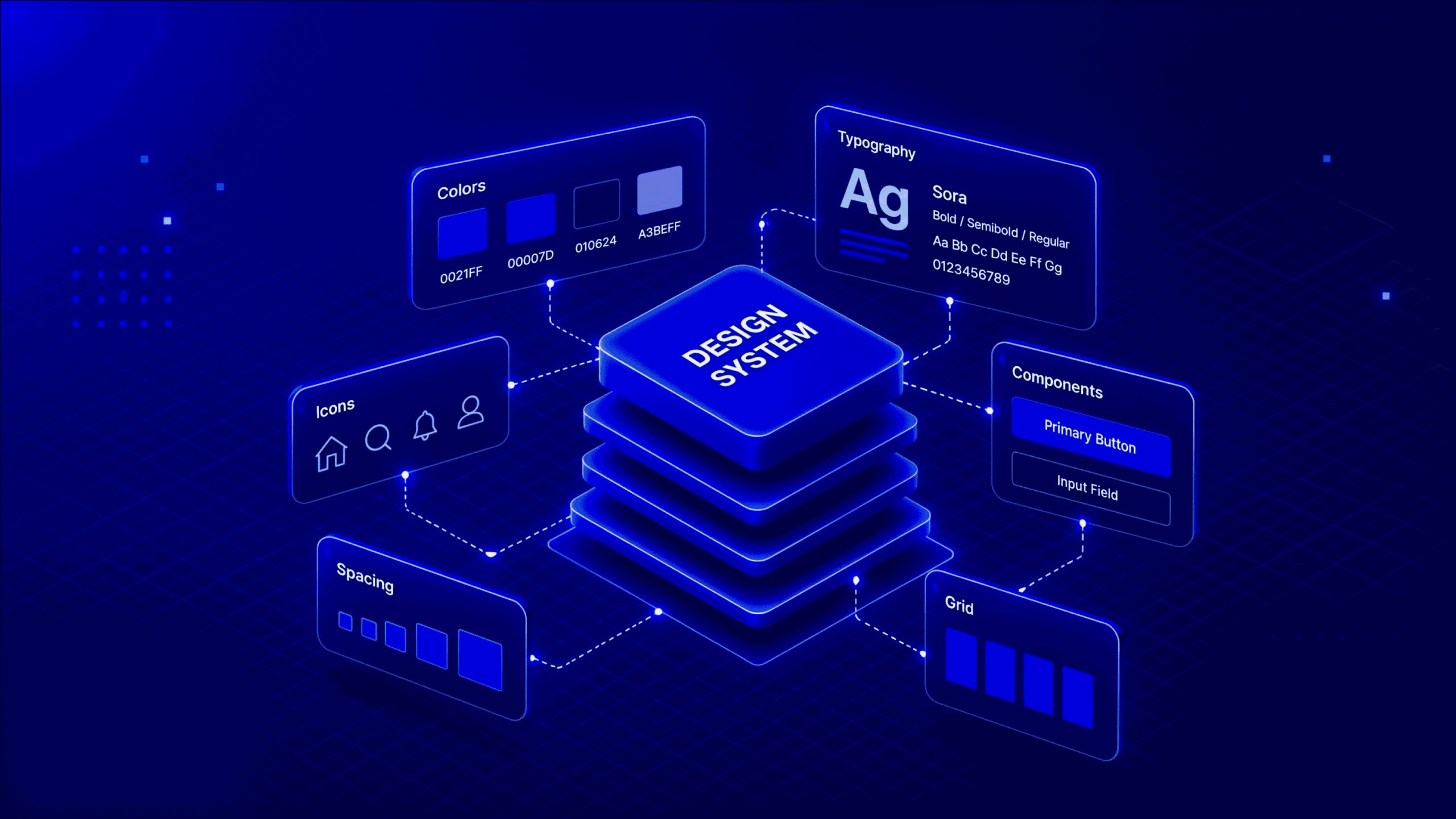
Problem: Different navigational patterns across match view, fantasy management, and community sections — forcing users to relearn the interface as they move between areas. Impact: Increased cognitive load, lower feature discovery, and a fragmented brand experience. Solution: Establish a design system with consistent navigation patterns, component behaviour, and interaction models across all sections of the app before development begins.
Emerging Trends Shaping the Future of Sports App UX Design
AI-Powered Sports Personalisation
Machine learning models are enabling a new generation of personalised sports experiences — surfacing content, match alerts, and fantasy recommendations that reflect each user's unique interests and behavioral patterns. A cricket fan who consistently checks fielding placement data receives a different in-match experience than one focused solely on run rates. AI development services integrated into sports platforms are transforming personalisation from a feature into a core product architecture.
Predictive Match Insights
Win probability models, projected score ranges, and over-by-over performance predictions are increasingly central to the cricket app UI design of leading platforms. These predictive overlays transform passive score tracking into analytical engagement, giving users reasons to check the app more frequently and stay longer per session. The UX challenge is presenting probabilistic data in ways that feel meaningful rather than confusing.
Real-Time Interactive Experiences
The next generation of sports apps is moving beyond consumption toward participation. In-app prediction games, live voting on match moments, and interactive data explorations create a fundamentally different engagement model — one where users are active participants rather than passive information consumers. This represents a significant product design opportunity for platforms willing to invest in the interaction model.
Voice-Based Sports Interactions
Voice interfaces are emerging as a viable complement to touch-based navigation for sports apps — particularly for score checks and match alerts in hands-free contexts. The UX implications of voice integration extend beyond adding a microphone button: they require rethinking information architecture to support non-visual retrieval of dynamic data.
Advanced Data Visualisation
Hawk-eye data, wagon wheel displays, pitch maps, and player movement analytics are shifting from broadcast-only features to mobile app standards. Platforms that invest in high-quality, mobile-optimised data visualisation — built on strong interaction design and UI/UX design principles — will differentiate effectively in a market where raw data availability is increasingly commoditised.
How TheFinch Design Approaches Sports App UX Design
At TheFinch Design, our work in the sports technology category is grounded in a research-first, performance-focused methodology. Our experience designing products like CricksLab — a cricket UX platform that crossed 10,000 downloads post-launch — demonstrates our understanding of the unique demands that sports engagement places on interface design.
Every sports product engagement begins with UX research into the specific behavioral patterns of the target user segment. Cricket fans, fantasy players, and live score users require fundamentally different information architectures and interaction models. We map each user type's journey in detail before any design work begins — identifying the high-pressure moments, the peak engagement windows, and the friction points that cost platforms conversions and retention.
Our UX Design Audit process is particularly valuable for sports platforms that have grown quickly but accumulated UX debt. By rigorously evaluating existing products against established usability heuristics and real user behaviour data, we identify the specific changes that will deliver the greatest impact on engagement and retention.
Key Takeaways
- Sports App UX Design operates under unique emotional and real-time constraints that require specialist design expertise.
- Understand the distinct behavioral profiles of cricket fans, fantasy players, and live score users — and design information hierarchies to match.
- Real-time data latency is a UX problem, not just a technical one — treat it as such in product requirements.
- Frictionless fantasy sports app design directly drives contest entry rates and platform revenue.
- Smart, personalised notifications are an engagement multiplier — undifferentiated alerts are a churn driver.
- Community features extend engagement beyond the match window and generate organic acquisition.
- Apply UX research, usability testing, and UX audits to continuously optimise the experience as user behavior evolves.
- AI personalisation, predictive insights, and interactive real-time experiences represent the next frontier in sports product design.
Conclusion
Sports App UX Design plays a crucial role in creating engaging, high-performing experiences for cricket fans, fantasy sports users, and live score audiences. Success comes from delivering real-time information, intuitive navigation, seamless user journeys, and personalized experiences that keep fans connected throughout every stage of the game.
As sports technology continues to evolve with AI, advanced analytics, and immersive experiences, products built on strong UX foundations will be best positioned to attract and retain loyal users.
At TheFinch Design, we help sports brands transform complex ideas into intuitive, user-centric digital products through strategic UX research, product design, and innovation-driven experiences that fans love.
Frequently Asked Questions
1. What is Sports App UX Design?
Sports App UX Design focuses on creating intuitive, engaging, and user-friendly experiences for sports apps, including cricket, fantasy sports, and live score platforms.
2. Why is UX important for fantasy sports apps?
Good UX simplifies team creation, contest participation, and player selection, helping improve user engagement, retention, and conversions.
3. What makes a successful cricket app design?
A successful cricket app offers real-time updates, clear navigation, easy-to-read interfaces, and personalized notifications for a seamless fan experience.
4. How do live score apps increase user engagement?
Live score apps keep users engaged through instant score updates, ball-by-ball commentary, match insights, and timely notifications.
5. Why hire a Sports App Design Agency in India?
A specialized sports app design agency understands fan behavior, fantasy sports trends, and real-time data challenges, helping build better-performing sports products.
6. What role does UX research play in sports app design?
UX research helps identify user needs, behaviors, and pain points, enabling the creation of more effective and enjoyable sports experiences.
7. Which sports products benefit most from UX design?
Cricket apps, fantasy sports platforms, live score apps, sports news portals, and fan engagement platforms all benefit significantly from strong UX design.
8. How can better UX improve sports app retention?
A smooth, fast, and personalized experience encourages users to return frequently, increasing long-term engagement and loyalty.
Ravi Talajiya
CEO of TheFinch
With over a decade of experience in digital design and business strategy, Ravi leads TheFinch with a vision to bridge creativity and purpose. His passion lies in helping brands scale through design thinking, innovation, and a deep understanding of user behavior.