The way people discover, evaluate, and choose property has fundamentally shifted. What was once a process rooted in newspaper listings and weekend open houses has become an entirely digital journey one that begins on a smartphone and unfolds across dozens of micro-decisions before a buyer ever contacts an agent.
Across global PropTech markets, the competition for buyer attention is fierce. Platforms like Zillow, Rightmove, NoBroker, and a growing wave of regional property apps have raised the bar for what users expect from a property search experience. Yet despite this acceleration, a significant percentage of users still abandon property apps within the first few minutes of use not because the listings aren't relevant, but because the experience is confusing, slow, or overwhelming.
This is where real estate app UX design becomes a genuine competitive advantage. The quality of your property search experience how intuitively filters work, how listings are presented, how easy it is to move from browsing to booking a visit directly determines whether a curious browser becomes a qualified lead.
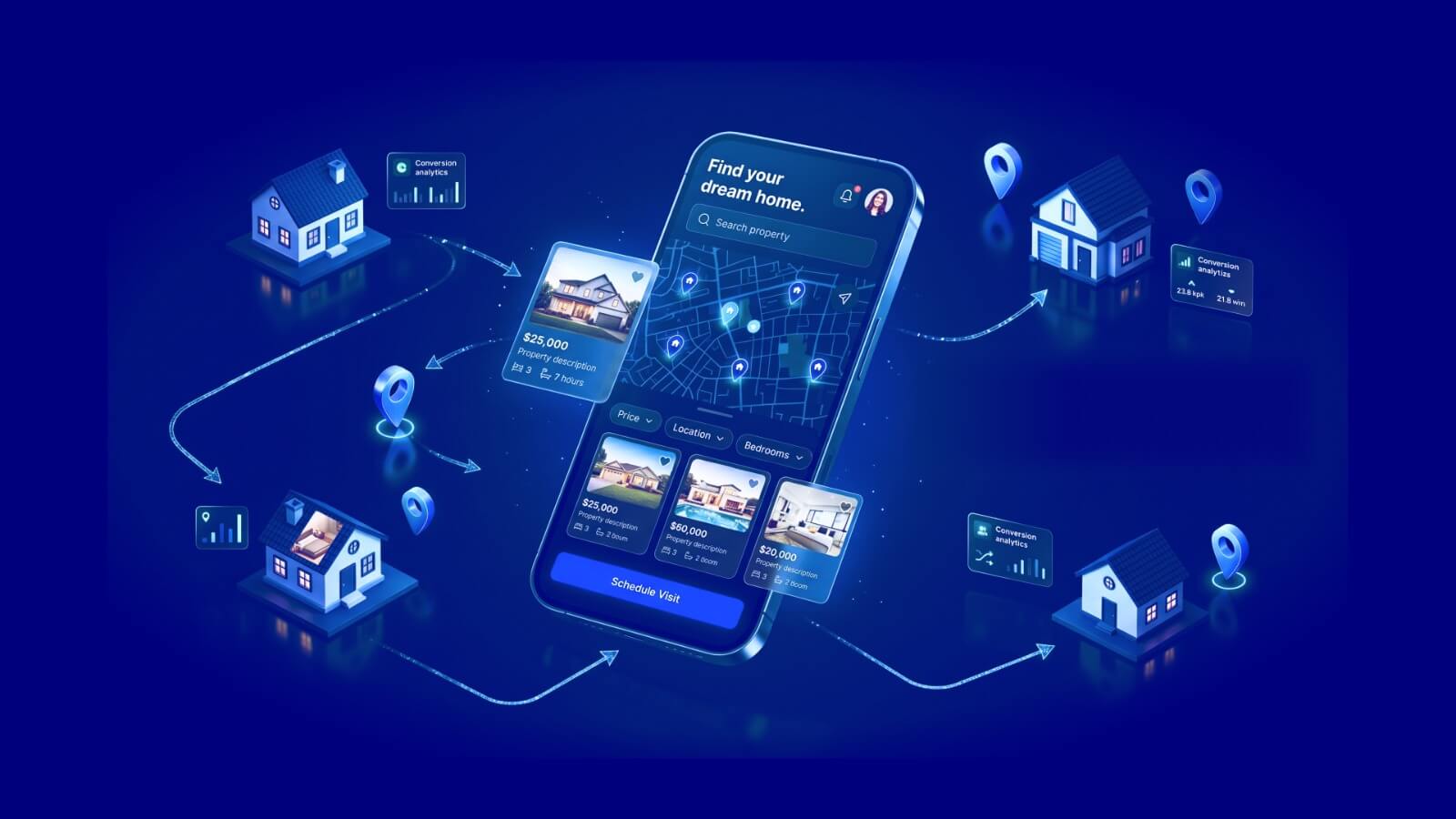
Property search UX is not just about aesthetics. It is about understanding how buyers think, what information they need at each stage of their journey, and removing every friction point that stands between discovery and decision. Platforms that invest in thoughtful real estate mobile app design consistently see higher engagement, longer session durations, and significantly improved lead conversion rates.
In this article, we explore the core principles of proptech UX design, the most common UX mistakes that cost platforms conversions, and the emerging trends shaping the next generation of property search experiences. Whether you are building a property listing app from the ground up or optimising an existing platform, this guide will help you understand how to design property search that actually converts buyers.
Why Property Search UX Is the Heart of Every Successful Real Estate App
Modern property buyers arrive at your platform with high expectations and limited patience. They have likely already visited three or four competitor apps before landing on yours. Within the first thirty seconds, they have formed an impression and that impression is shaped almost entirely by the experience, not the inventory.
Today's users expect mobile-first responsiveness, fast-loading visual content, intuitive navigation, and smart filtering that narrows their choices without requiring expertise. When these expectations are not met, the data tells a clear story: high bounce rates, low session depths, and poor lead quality.
The psychology of property search is also worth understanding. Buyers are not just looking for a house they are imagining a life. Every element of your real estate app UX design either supports or undermines that imagination. A cluttered results page creates cognitive overload. A slow-loading gallery kills excitement. An unclear contact journey breaks trust at the most critical moment.
Conversely, when property search UX is done well, the results are measurable. Platforms with well-optimised search and filtering experiences report conversion improvements of 20 to 40 percent over baseline. Users spend more time exploring listings, shortlist more properties, and are significantly more likely to submit an inquiry. For real estate businesses, this is not a design preference it is a growth lever.
This is why leading UI UX Design Agencies working in the PropTech space treat the search experience as the primary product surface, not a secondary feature.
Understanding the Modern Property Buyer's Journey
Effective proptech UX design begins with a deep understanding of how buyers actually move through the property discovery process. Rather than treating the experience as a single interaction, it is more accurate to map it across three distinct phases each with its own user mindset, needs, and potential friction points.
Discovery Phase
At the start of their journey, buyers are exploratory and uncertain. They are browsing broadly, establishing a sense of what is available within a general area or price range. At this stage, the most common pain points are poor search interfaces that force users to define criteria before they are ready, irrelevant results that erode trust, and overwhelming filter panels that feel more like a form than a search tool. The UX priority here is to make entry frictionless broad enough to invite exploration, smart enough to start surfacing relevant options quickly.
Evaluation Phase
Once a buyer has identified a shortlist of interest, they enter a comparative mindset. They are reviewing property details side by side, assessing photos, floor plans, locality maps, and pricing context. Pain points here include inconsistent listing quality (missing photos or incomplete information), poor map integration, and the absence of tools that help compare properties directly. The UX goal at this stage is to build confidence giving buyers enough information to feel informed without overwhelming them.
Decision Phase
When a buyer is ready to take action, the experience must make it effortless to connect with an agent, schedule a visit, or express interest. This is where many platforms fail most severely. Complicated contact forms, unclear call-to-action pathways, and lack of real-time availability information all create hesitation at the moment of highest intent. A well-designed real estate mobile app removes every barrier between decision and action, turning motivation into a measurable lead.
7 Property Search UX Principles That Increase Buyer Conversions
1. Intelligent Search and Filtering
The search interface is the front door of your property platform. If it is difficult to use, buyers leave before they ever see what you have to offer. Intelligent search design means creating a layered filtering system that feels natural starting with the most essential criteria (location, budget, property type) and progressively revealing more specific options (amenities, floor level, furnishing status) as users narrow their intent.
Search suggestions powered by predictive text and location intelligence are particularly effective. When users see relevant options appearing as they type, confidence in the platform's competence increases. Saved search functionality allowing buyers to return to their criteria without re-entering them also reduces friction for repeat visits.
A strong UI UX Design Firm will always prioritise filter usability in early UX research and prototyping phases, testing real users to understand which criteria matter most and in what order.
2. High-Quality Visual Experiences
Property is an inherently visual category. Buyers make emotional decisions based on what they see, and no amount of descriptive text will replace the impact of a strong gallery experience. High-resolution photography, optimised for fast mobile loading, is non-negotiable. Where possible, video walkthroughs and virtual tours add significant value users who engage with virtual tours are demonstrably more likely to book physical viewings.
Image optimisation strategy matters here too. Progressive loading, lazy loading below the fold, and adaptive image delivery based on network speed all contribute to an experience that feels fast and polished especially on mobile. As a User Interface Design Company, treating the visual presentation of listings as a core UX responsibility (not just a content decision) leads to meaningfully higher engagement metrics.
3. Map-First Navigation
Location is the single most important variable in property search. Before price, before size, before aesthetics buyers want to know where a property is in relation to their work, their children's schools, and their daily routines. Map-first navigation acknowledges this reality.
An interactive map interface that allows users to search within a drawn boundary, filter by proximity to amenities, and visually understand neighbourhood density provides a fundamentally more intuitive experience than a list view alone. Overlay layers showing public transport routes, school zones, and commercial areas transform the map from a location indicator into a decision-support tool.
4. Personalised Property Recommendations
AI-powered recommendation engines are no longer a luxury feature they are an expectation in any mature digital platform. When a property app learns from user behaviour (viewed listings, saved properties, search patterns) and surfaces relevant recommendations accordingly, session times increase and users develop a stronger sense of the platform's value.
Personalisation also extends to notification strategy. Alerting users when a new property matching their saved criteria is listed or when a watched property reduces in price keeps the platform top of mind throughout what can be a months-long decision process. This is where AI development services integrated into the product design create a significant competitive moat.
5. Frictionless Property Comparison
Buyers consistently compare multiple properties before making a decision. Yet many platforms make this process unnecessarily difficult forcing users to navigate back and forth between listing pages, rely on memory, or use external tools to compare options.
A well-designed comparison feature allows users to shortlist properties and view them side by side with key metrics aligned for easy scanning. Saved favourites should persist across sessions so buyers can return to their shortlist without starting over. This is a relatively low-effort feature investment with a disproportionate impact on user satisfaction and conversion.
6. Trust-Building Design Elements
Trust is the invisible infrastructure of every property transaction. Buyers are making one of the largest financial decisions of their lives and they are doing an increasing proportion of that due diligence on a small screen. Design signals matter enormously here.
Verified listing badges, agent credibility indicators (profile photos, ratings, response time data), transparent pricing histories, and clear information about listing recency all contribute to a platform that feels trustworthy. Conversely, platforms with outdated listings, anonymous agents, and no social proof signal risk and buyers respond accordingly.
An experienced User Experience Agency will integrate trust signals systematically throughout the design system, treating them as functional UX elements rather than cosmetic additions.
7. Mobile-Optimised Inquiry Experience
The inquiry moment is the conversion event that all other UX work is building toward. When a buyer decides to contact an agent or schedule a viewing, the experience must make that action as easy as possible ideally achievable in two or three taps.
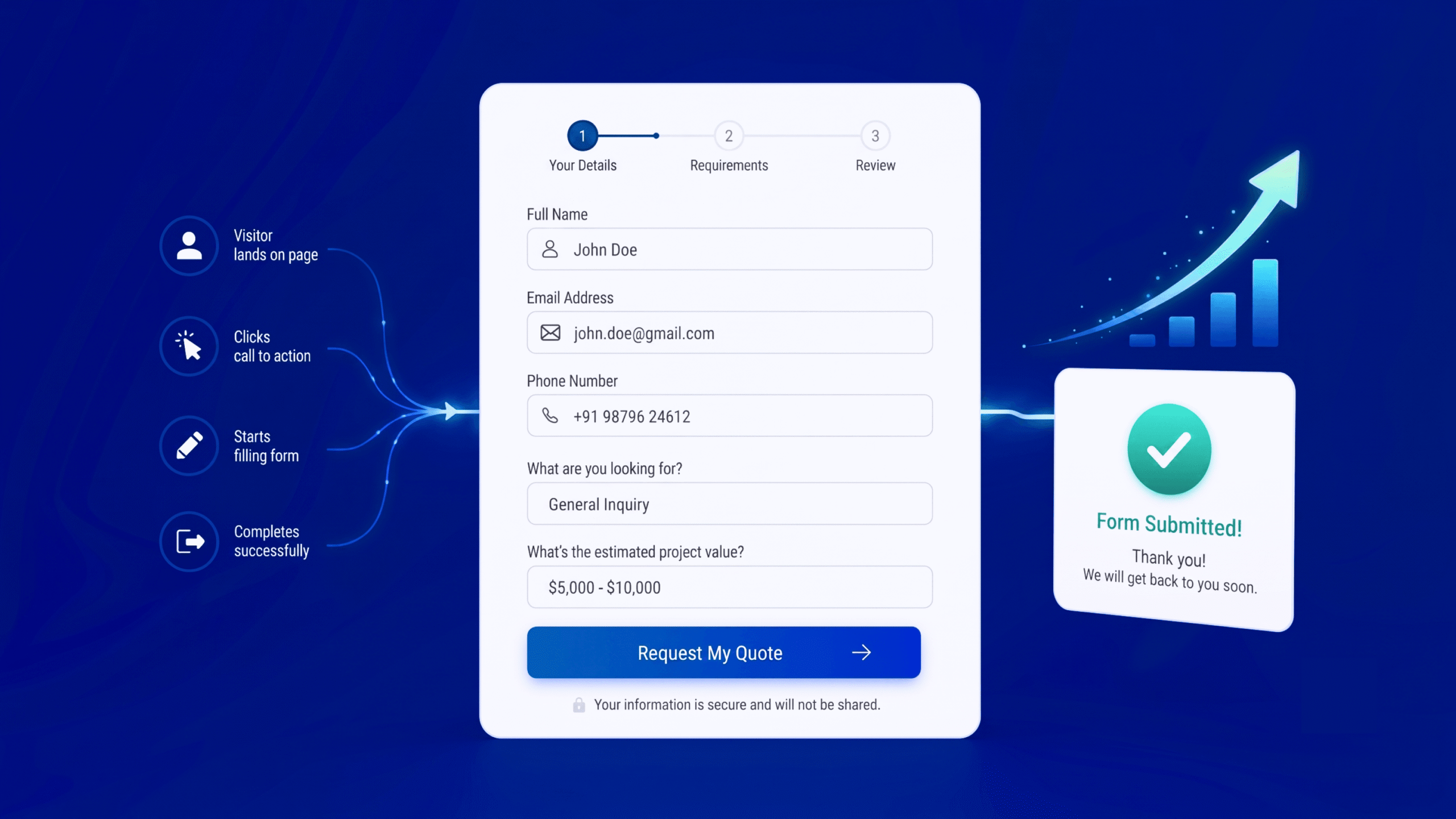
One-click calling, pre-filled inquiry forms, WhatsApp integration for markets where it is the dominant communication channel, and real-time scheduling tools that show agent availability all reduce the friction between decision and action. Forms should request the minimum information necessary at the point of first contact additional details can be gathered progressively. Every additional field in a lead form is an opportunity for abandonment.
This final mile of the UX the mobile inquiry experience is where real estate mobile app design either delivers on its promise or loses the conversion at the critical moment.
Common UX Mistakes That Hurt Property Search Conversion Rates
Overwhelming Filters
Problem: Presenting fifteen or twenty filter options simultaneously. User impact: Cognitive overload causes buyers to disengage before viewing results. Solution: Use progressive disclosure show five or six core filters with an expandable "More filters" option for advanced criteria.
Poor Search Results Relevance
Problem: Results that do not match user intent wrong location, wrong price band, mismatched property types. User impact: Trust in the platform erodes rapidly after two or three irrelevant results. Solution: Invest in search algorithm quality and allow users to provide easy feedback on relevance.
Slow Loading Property Pages
Problem: Property detail pages that take more than three seconds to load on a standard mobile connection. User impact: Mobile users abandon at high rates when pages are slow; excitement dissipates with every second of wait. Solution: Prioritise performance optimisation especially image compression, lazy loading, and server-side rendering as a UX requirement, not a purely technical concern.
Complicated Contact Forms
Problem: Multi-step inquiry forms with excessive required fields. User impact: Drop-off rates increase sharply with each additional form field beyond the minimum necessary. Solution: Reduce contact forms to name, phone number, and an optional message. Additional qualification can happen in the follow-up conversation.
Lack of Personalisation
Problem: Every user seeing the same default experience regardless of their browsing history or stated preferences. User impact: Return visitors feel unrecognised, reducing the incentive to re-engage with the platform. Solution: Implement even basic personalisation remembered searches, recommended listings based on viewed properties, and tailored homepage content for returning users to meaningfully improve retention.
Emerging Trends in Real Estate Mobile App Design
AI-Powered Property Discovery
Machine learning models trained on user behaviour data are beginning to power next-generation discovery experiences surfacing properties that match unstated preferences, predicting neighbourhood desirability trajectories, and proactively alerting buyers to opportunities before they actively search. AI development services are now a core component of competitive PropTech product strategy.
Predictive Search Experiences
Rather than waiting for buyers to initiate a search, predictive systems learn from session data and proactively suggest refinements. A buyer who consistently views three-bedroom properties in a particular neighbourhood can be shown those results by default reducing the effort required to reach relevant listings on every visit.
Augmented Reality Property Tours
AR technology is moving from novelty to utility in property search. The ability to point a phone at a room and visualise different furniture configurations, or to overlay architectural changes onto an existing space, meaningfully reduces the uncertainty that slows purchase decisions. Platforms that integrate AR effectively are differentiated in a way that is difficult for competitors to replicate quickly.
Hyper-Personalised Buyer Journeys
The next evolution of proptech UX design moves beyond personalising what users see to personalising how they experience the entire platform. First-time buyers and seasoned property investors have fundamentally different information needs and platforms that adapt their UX accordingly will create a stronger product-market fit for both audiences.
Data-Driven PropTech UX Design
The most sophisticated product design approaches in PropTech now treat UX as a continuously optimised system rather than a fixed deliverable. A/B testing of key conversion surfaces, heat mapping of user interactions, funnel analysis of the inquiry pathway, and regular UX design audits based on user behaviour data are becoming standard practice for platforms serious about growth.
How TheFinch Design Creates Conversion-Focused Property Search Experiences
At TheFinch Design, our work in the real estate and PropTech category is built on the same foundation that drives everything we do: deep UX research, rigorous journey mapping, and a product design process that begins with user understanding and ends with measurable outcomes.
Every engagement begins with a thorough UX Design Audit an honest assessment of where the current experience is losing users and why. From there, we define the design strategy, map the complete buyer journey, and build a prototyping roadmap that allows us to test critical assumptions before committing to a full design system.
Our digital prototyping and usability testing processes are particularly important for property platforms, where the stakes of a poor UX decision are high both in terms of buyer abandonment and developer rework costs. By validating the interaction model before build, we help clients move faster and with greater confidence.
As a UI UX Design Agency with specific experience in real estate UX, we understand the domain-specific challenges of property search: the complexity of filter hierarchies, the performance demands of image-heavy interfaces, and the trust signals that matter to buyers at different stages of their journey. Our role is not just to make platforms look better it is to make them convert more effectively.
Whether you are building a full product design from scratch, launching an MVP, or optimising an existing platform with a design discovery sprint, TheFinch Design brings the strategic UX expertise that real estate and PropTech businesses need to compete in a digital-first market.
Key Takeaways
- Real estate app UX design is a direct driver of buyer conversion not a cosmetic consideration.
- Map the buyer journey across Discovery, Evaluation, and Decision phases and design specifically for each stage.
- Prioritise intelligent filtering that uses progressive disclosure rather than overwhelming buyers upfront.
- Visual quality, performance, and map-first navigation are non-negotiable baseline expectations for modern property apps.
- Build trust signals verified listings, agent credibility, transparent pricing into the design system from the start.
- Optimise the inquiry experience for mobile-first, minimum-friction contact this is where conversions are won or lost.
- Use UX audits, usability testing, and data analysis to treat your UX as a continuously optimised product, not a fixed deliverable.
- Emerging capabilities in AI, AR, and predictive search represent significant opportunities for platforms willing to invest in proptech UX design innovation.
Conclusion
Real estate app UX design is no longer a differentiator it is the baseline for competing in modern property markets. Platforms that treat property search UX as a core product investment not a visual afterthought consistently outperform on lead generation, retention, and revenue. Every reduction in friction, every trust signal added, every personalization layer built compounds directly into conversion growth.
If your property platform is ready to close the gap between its current performance and its true potential, TheFinch Design is the strategic UI UX Design Agency and Product Design partner built to make that happen.
Frequently Asked Questions
What is real estate app UX design?
Real estate app UX design refers to the strategic and visual design of digital property platforms encompassing the entire user experience from initial search and filtering through property evaluation to the final inquiry or booking action. It involves UX research, interaction design, information architecture, visual design, and usability testing all applied specifically to the challenges and user behaviours of the property discovery journey.
Why is property search UX important?
Property search UX directly determines whether users stay on your platform and convert into leads. Buyers abandon apps that are difficult to navigate, slow to load, or irrelevant in their results often within the first minute. A well-designed search experience builds confidence, reduces friction, and guides buyers naturally from browsing to inquiry, making it one of the highest-ROI investments a property platform can make.
How do property search filters affect conversions?
Search filters have a significant and measurable impact on conversion rates. Filters that are too complex or numerous cause cognitive overload and lead to abandonment. Filters that are too limited frustrate buyers who cannot narrow their results meaningfully. The optimal approach supported by UX research and usability testing uses progressive disclosure to present the most relevant criteria first, with advanced options available on demand. Well-designed filters improve result relevance, reduce time-to-shortlist, and increase inquiry rates.
What features should a real estate mobile app include?
A competitive real estate mobile app should include: intelligent search and filtering with location-based suggestions; high-quality image galleries and virtual tour capability; interactive map navigation with amenity overlays; AI-powered personalised recommendations; a saved favourites and property comparison tool; verified listing and agent credibility indicators; and a frictionless one-click inquiry or scheduling experience. Platforms built with a strong mobile app development and full product design foundation will consistently outperform those where UX is an afterthought.
How does PropTech UX design improve buyer engagement?
PropTech UX design improves buyer engagement by reducing friction at every stage of the property discovery journey making it easier for users to find relevant listings, evaluate them confidently, and take action when they are ready. Personalisation features powered by AI development services keep buyers returning to the platform over a long consideration period. Trust-building design elements reduce hesitation at the inquiry stage. And a consistently polished, fast, mobile-first experience signals professional credibility, giving buyers the confidence to engage with agents and move forward in their property journey.
Ravi Talajiya
CEO of TheFinch
With over a decade of experience in digital design and business strategy, Ravi leads TheFinch with a vision to bridge creativity and purpose. His passion lies in helping brands scale through design thinking, innovation, and a deep understanding of user behavior.