Building a mobile app is no longer just about creating a functional product and publishing it to the App Store or Google Play. As businesses grow, their mobile applications must evolve with changing customer expectations, new technologies, increasing user volumes, and expanding business requirements.
A product that works well for 1,000 users may not provide the same experience when it reaches 100,000 users. New features can introduce complexity, navigation can become difficult, and inconsistent interfaces can gradually affect usability.
This is why scalability should be considered from the beginning of the product journey.
A scalable mobile app is designed to accommodate growth without sacrificing performance, usability, consistency, or business value. It requires a combination of thoughtful Product design, flexible technology, strong UX strategy, and a design system that can support future expansion.
For businesses planning a new mobile application—or redesigning an existing one—working with an experienced UI UX Design Agency can help establish the right foundation before development becomes expensive.
Here are the key strategies for building a mobile app that is ready for future growth.
1. Start With a Clear Product Strategy
Scalability begins with understanding what the product needs to achieve.
Before designing screens, businesses should define the target audience, core problems, business objectives, primary user journeys, and long-term product vision.
A common mistake is trying to include every possible feature in the first version.
This often creates a complicated MVP that is expensive to develop and difficult for users to understand.
Instead, identify the essential features required to deliver the product's core value. Additional functionality can then be introduced as customer needs and business requirements become clearer.
TheFinch Design's Design Discovery approach focuses on understanding users, business requirements, competitors, and product opportunities before moving into detailed design. This type of early strategic thinking can reduce unnecessary development while creating a stronger foundation for future growth.
2. Design the MVP With the Future in Mind
A minimum viable product should be minimal—but it should not be designed as a dead end.
The initial product architecture and UX should leave room for future features.
For example, if a business plans to eventually introduce subscriptions, multiple user roles, integrations, or personalization, the initial experience should be structured so those capabilities can be added without completely redesigning the application.
This is where strategic Product design becomes important.
Designers should consider not only what the product needs today, but also how user journeys may evolve tomorrow.
The objective is not to design every future feature immediately.
It is to create a flexible foundation that can support them.
3. Build a Scalable Information Architecture
As a mobile application grows, its information architecture becomes increasingly important.
A simple application may have five primary screens.
A mature platform could have dozens of workflows, settings, dashboards, notifications, reports, integrations, and account functions.
Without a clear information architecture, users can quickly become overwhelmed.
A scalable structure should make it easy to:
- Add new features
- Group related functionality
- Maintain predictable navigation
- Support different user roles
- Reduce unnecessary steps
- Improve feature discovery
An experienced UX Agency approaches navigation from the user's perspective rather than the internal structure of the organization.
The question should not be, "Where should our teams place this feature?"
It should be, "Where would users naturally expect to find it?"
4. Create a Flexible Design System
One of the most important foundations of a scalable mobile product is a strong design system.
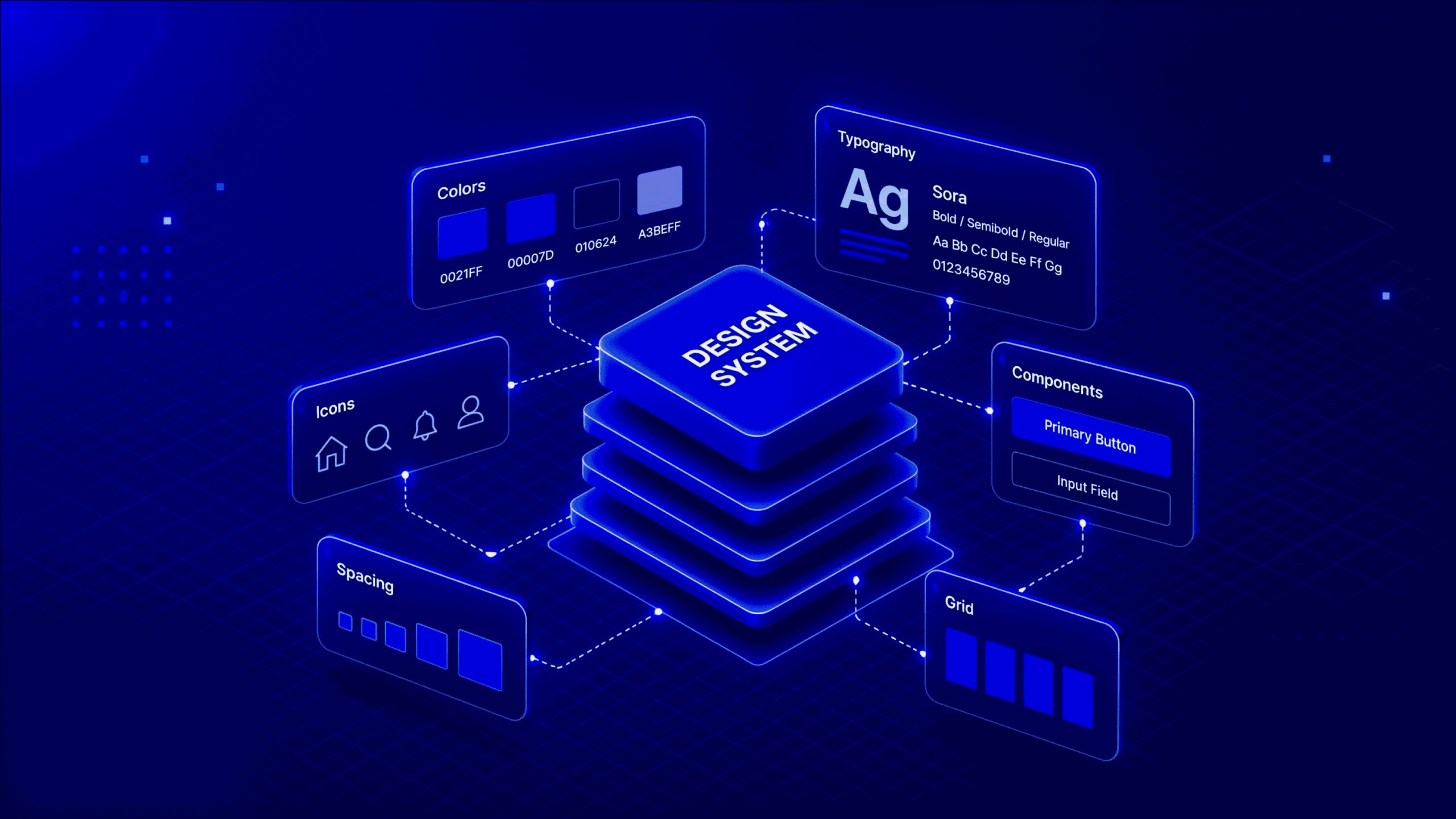
A design system provides reusable components, interaction patterns, typography, colors, spacing, icons, and accessibility standards.
Instead of designing every new screen from scratch, teams can use established components and patterns.
This creates several benefits:
- Faster product development
- Greater visual consistency
- Easier collaboration
- Simplified design updates
- Better scalability
- More predictable user experiences
TheFinch Design provides Design System Services focused on consistency and scalability. Its UI/UX offering also includes reusable UI pattern libraries designed to support growing digital products.
For businesses expecting rapid product expansion, a design system is not simply a visual guideline.
It becomes part of the product infrastructure.
5. Prioritize User Experience Before Adding Features
Growth often creates a temptation to add more features.
But more functionality does not automatically create more value.
In fact, excessive features can make a product harder to understand.
A successful User Experience Agency helps businesses prioritize features according to user needs and business impact.
Before introducing a new feature, ask:
Does it solve a real customer problem?
How frequently will users need it?
Does it support the core product experience?
Will it introduce unnecessary complexity?
Can it be integrated into an existing workflow?
These questions help prevent feature overload.
A scalable app should become more capable without becoming more confusing.
6. Use Research and Testing to Validate Decisions
Scalability should not be based entirely on assumptions.
User research provides insight into customer needs, expectations, frustrations, and behaviors.
Usability testing then helps determine whether proposed solutions actually work.
TheFinch Design's UI/UX methodology includes UX Research, usability testing, heuristic evaluation, digital prototyping, and design audits.
Testing prototypes before development can reveal:
- Confusing navigation
- Unclear terminology
- Difficult workflows
- Poor information hierarchy
- Feature discovery problems
- Unnecessary interactions
Finding these issues during the design stage is generally much easier than fixing them after launch.
7. Design for Multiple User Types
As a business grows, the number of user types often grows with it.
An application may initially serve individual users and later expand to teams, managers, administrators, partners, or enterprise customers.
The UX needs to accommodate these different requirements without making the product unnecessarily complicated.
Role-based experiences can help.
For example, an administrator may need advanced controls while a regular user only needs access to everyday tasks.
A scalable mobile experience should provide the right level of functionality to the right user.
This requires thoughtful user flows, permissions, navigation, and information architecture.
8. Prepare the App for AI-Powered Experiences
Artificial intelligence is increasingly becoming part of modern digital products.
AI can support personalization, recommendations, automation, conversational interfaces, predictive insights, content generation, and intelligent workflows.
However, simply adding AI does not automatically improve a product.
An AI UX design agency must consider how users understand, control, trust, and interact with AI-powered functionality.
For example, an AI-generated recommendation should clearly communicate what it is and why it is relevant. An AI assistant should provide users with ways to correct, refine, or reject results.
TheFinch Design positions its UI/UX services around AI-powered and human-centric experiences, combining artificial intelligence with research, usability, and design strategy.
The future of mobile UX is not about replacing human decision-making with AI.
It is about using AI to make complex experiences more useful and intuitive.
9. Design for Performance and Growth
Scalability is not only a UX concern.
Performance becomes increasingly important as applications gain users, data, integrations, and functionality.
A scalable mobile product should be designed with performance in mind from the beginning.
Design decisions can influence performance through:
- Image usage
- Animation complexity
- Data-heavy screens
- Loading states
- Content structure
- Interaction patterns
Designers and developers should collaborate closely to balance visual quality with technical performance.
Users should never feel that an application has become slower simply because the business has grown.
10. Create Consistent Cross-Platform Experiences
Many businesses operate across iOS, Android, web applications, and other digital touchpoints.
Users expect these experiences to feel connected.
The interface does not necessarily need to look identical across every platform. Instead, the underlying experience should remain familiar.
Navigation patterns, terminology, branding, interaction principles, and core workflows should remain consistent.
A professional User Interface Design Company can establish reusable interface principles that maintain brand and product consistency across platforms.
This becomes especially important as organizations expand into new markets and digital channels.
11. Build Accessibility Into the Foundation
Accessibility should not be added after a product has already been designed.
It should be considered from the beginning.
Readable typography, appropriate contrast, clear touch targets, understandable feedback, logical navigation, and accessible interaction patterns help make mobile applications usable for a wider audience.
Accessibility also improves the general experience.
A clearer interface is easier for everyone to understand.
TheFinch Design includes accessibility and inclusive design within its UI/UX services, including WCAG-oriented evaluation and accessibility audits.
Designing inclusively from the beginning can also reduce the need for expensive redesigns later.
12. Plan for Continuous Product Evolution
A scalable mobile app is never truly finished.
After launch, real users provide information that cannot always be discovered during initial research.
Analytics, customer feedback, usability testing, reviews, and support requests reveal where improvements are needed.
Businesses should regularly evaluate:
- User retention
- Feature adoption
- Conversion rates
- Task completion
- Customer feedback
- Navigation behavior
- Performance
TheFinch Design also offers Post-Launch UX Monitoring & Support as part of its broader UI/UX service approach, helping products continue to evolve after launch.
Continuous optimization ensures the product grows with its customers rather than becoming outdated.
Choosing the Right Design Partner
Building a scalable app requires more than attractive screens.
The right partner should understand user research, interaction design, product strategy, visual design, prototyping, testing, accessibility, and design systems.
A strong Design Agency should also understand the business behind the product.
TheFinch Design positions itself as a product design partner for startups, enterprises, and growing businesses, with dedicated product solutions and full product design capabilities.
Whether you need an initial MVP, a complete product experience, or a redesign of an existing application, choosing a team that thinks beyond individual screens can make a significant difference.
How TheFinch Design Helps Build Scalable Mobile Products
At TheFinch Design, we combine human-centered thinking, AI-led design, research, and strategic product expertise to create digital products that are built for long-term growth.
Our UI/UX Design Services cover research, wireframing, information architecture, prototyping, usability testing, design systems, accessibility, responsive design, product redesign, and conversion optimization.
As a UI UX Design Firm, we focus on more than individual interfaces. We consider how the product will evolve, how users will interact with it at scale, and how the design can support future business objectives.
Our work across mobile apps, SaaS products, enterprise platforms, fintech, healthcare, logistics, e-commerce, and other industries reflects this product-focused approach.
For businesses looking for a strategic UI UX Agency, the objective should be clear: build a product that can grow without losing its usability or identity.
Conclusion
Building a scalable mobile app requires thinking beyond the initial launch.
Businesses need a clear product strategy, flexible information architecture, reusable design systems, research-driven decisions, accessible interfaces, strong performance, and a plan for continuous improvement.
A scalable app should allow the business to add features, reach new users, enter new markets, and adopt emerging technologies without constantly rebuilding the experience from scratch.
That is where strategic UX becomes a competitive advantage.
Whether you are working with a startup, enterprise platform, or growing digital business, partnering with an experienced UX Agency can help you create a stronger foundation for sustainable growth.
The right UI UX Design Agency does not simply design what your product looks like today. It helps shape what your product can become tomorrow.
If you're planning a new mobile application or preparing an existing product for its next stage of growth, connect with TheFinch Design to explore how research-driven, AI-led, and scalable design can turn your product vision into a digital experience built for the future.
Ravi Talajiya
CEO of TheFinch
With over a decade of experience in digital design and business strategy, Ravi leads TheFinch with a vision to bridge creativity and purpose. His passion lies in helping brands scale through design thinking, innovation, and a deep understanding of user behavior.